N/A
Credits
N/A
Artists
- Ben Arnold
- Omar Badsha
- Hilda Bernstein
- Willie Bester
- Gerard Bhengu
- Gregoire Boonzaier
- Arthur Butelezi
- Chauke Family
- W.H. Coetzer
- Peter Clarke
- Welcome Danca
- Sibusiso Duma
- Diederick During
- Dumile Feni
- Emily Fern
- Judith Gluckman
- Constance Greaves
- S’Celo Hlongwa
- Jackson Hlungwani
- Gavin Jantjies
- Sfiso Ka-Mkame
- Dorothy Kay
- Job Kekana
- Thomas Kgope
- Eli Kobeli
- Welcome Koboka
- Dezso Koenig
- Vincent Kubeka
- Sydney Kumalo
- Amos Langdown
- Maggie Laubser
- Ezrom Legae
- Simon Lekgetho
- Neville Allan Lewis
- Lippy Lipshitz
- Zan Louw
- Noria Mabasa
- Fikile Magadledla
- Judus Mahlangu
- Zamani Romeo Makhanya
- Trevor Makhoba
- Enos Makhubedu
- Joseph Manana
- Billy Mandindi
- Louis Maqhubela
- Joe Maseko
- Mizream Maseko
- Colbert Mashile
- Johannes Maswanganyi
- Leonard Matsoso
- Azaria Mbatha
- Eric Mbatha
- Gladys Mgudlandlu
- M.T. Mhlongo
- Mbongiseni Jerome Mkhize
- Simon Mnguni
- David Mogano
- John Koenakeefe Mohl
- Nathaniel Mokgosi
- Ernest Mancoba
- Julian Motau
- Tommy Motswai
- Harry Moyaga
- Clifford Mpai
- George Msimang
- Zwelethu Mthethwa
- Myeza Mthokozisi
- John Muafangejo
- Nelson Mukhuba
- Lucy Mullins
- Albert Munyai
- Selby Mvusi
- Sipho Ndebele
- Ephraim Ngatane
- Lindelani Ngwenya
- Sam Nhlengethwa
- Hezekiel Ntuli
- Derrick Nxumalo
- Frederick Hutchinson Page
- George Pemba
- Marianne Podlashuc
- Alexis Preller
- Dan Rakgoathe
- Philip Rikhotso
- Winston Saoli
- Johannes Segogela
- Gerard Sekoto
- Phutuma Seoka
- Cyprian Shilakoe
- Paul Sibisi
- Sithembiso Sibisi
- Durant Sihlali
- Lucas Sithole
- Themba Siwela
- Cecil Skotnes
- Irma Stern
- Alfred Thoba
- Enoch Tshabalala
- Barbara Tyrrell
- Maurice Van Essche
- Mary Van Wyk
- Marjorie Wallace
- Clive Zamani Xaba
- Vuminkosi Zulu
- Tito Zungu
- Manfred Zylla
Sidney Beck
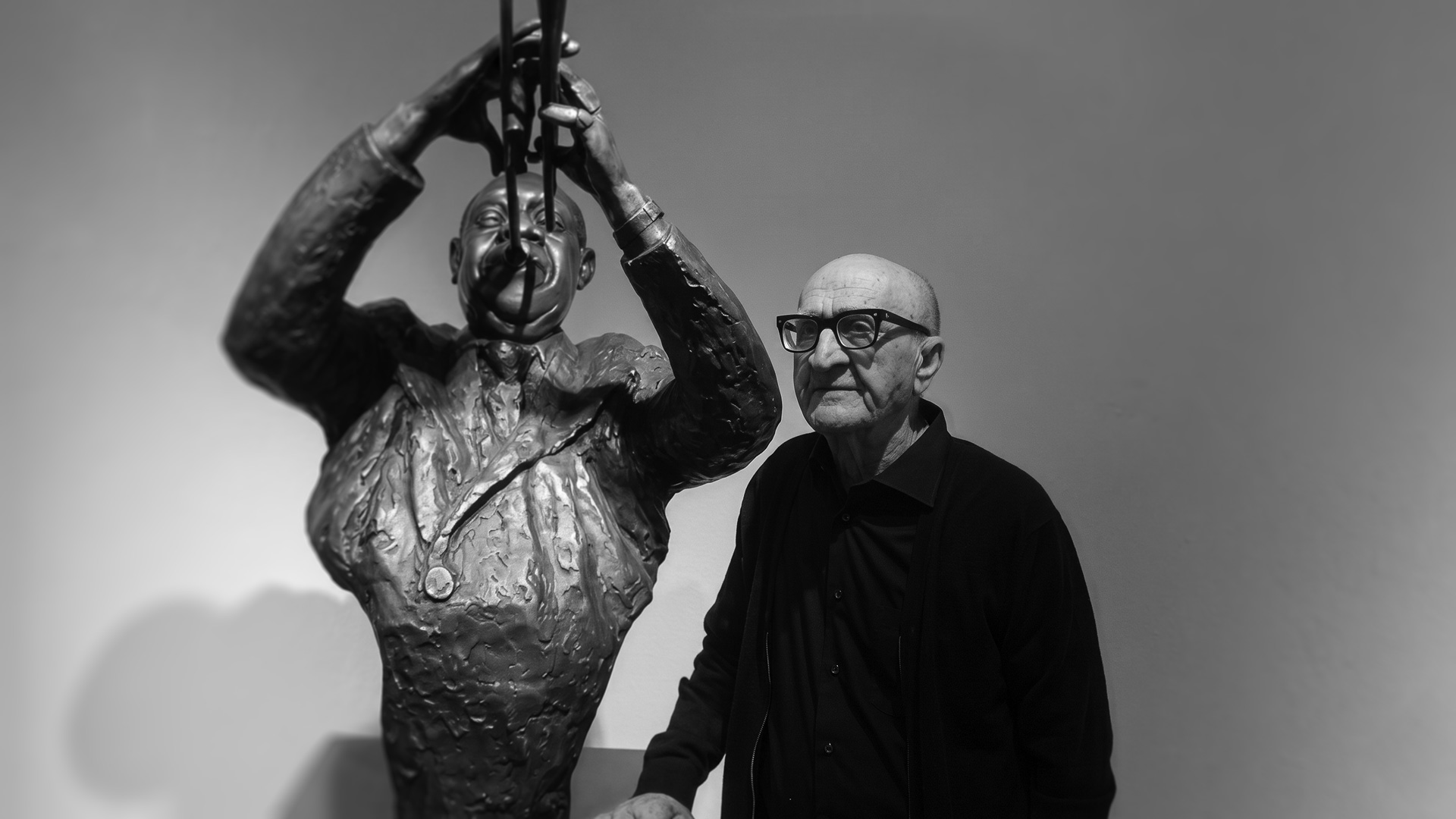
When looking at the work of Sidney Beck, born in 1936 in Bertrams, Johannesburg, you see a story of pure creative drive pushing through a system designed to hold it back. Fascinated by reproductions of old masters as a child, Beck didn’t come up through traditional formal art training. Instead, he spent twenty-three years as a teacher before transitioning to art full-time. In doing so, he cemented his place within a vital lineage of South African autodidacts. He sits firmly within the historical narrative canon alongside pioneers of “township art” and Social Realism – artists like Gerard Sekoto and George Pemba who sought to create a crucial visual archive of marginalized communities. While early in his career, his work reflected the sadness and frustration over the systemic lack of opportunity for his people, he deliberately shifted toward a spirit of optimism, focusing heavily on the everyday, universal pursuits of township life. Beck’s work pushes against the boundaries of the canon; he didn’t just document the struggle, he captured the unbreakable, vibrant spirit of communities forced to the periphery of the urban landscape.
His oil painting Card Players is a perfect example of this. Even though Beck is often better known in the art market for his bronze sculptures, like his iconic depictions of the Penny Whistler, this piece shows how brilliantly he brought a three-dimensional, sculptural feeling onto a flat canvas. He uses thick, heavy layers of paint, giving the figures a raw, textured materiality. The paint isn’t just brushed on; it’s practically built up on the surface, echoing the hands-on labor of his sculptural work. The piece really pops thanks to its clever chromatic tension. The bright yellow shirt and deep blue pants of the main figure stand out sharply against the moody, earthy background. It’s a deliberate clash that creates a vibrant energy, pulling your eye right into the center of the action.
Looking closely at the piece, it’s hard not to see a clear nod to the European post-impressionist masters he likely admired, specifically Paul Cézanne’s famous Card Players series and Vincent van Gogh’s The Potato Eaters. Like Van Gogh, Beck leans into a dark, earthy palette and rough, heavy brushstrokes to give an honest, unglamorised look at everyday working-class people sharing a communal space. At the same time, he captures that quiet, monumental concentration you see in Cézanne’s work. Beck takes a simple, everyday pastime in a South African context and elevates it, giving his figures a profound sense of weight, history, and dignity.
Within the broader discourse of South African modernism, it just shows that Beck cared more about the atmospheric resonance than getting every literal detail right. He wasn’t focused on the mechanics of the game; he wanted to capture the intimacy of people coming together and sharing a moment of focus.
Ultimately, Card Players eschews the overt tropes of political trauma so often expected from South African artists of his generation. Instead, it highlights a quieter but just as powerful reality: the simple act of taking a break, hanging out, and asserting humanity and camaraderie in a fractured social landscape. With this vibrant articulation of form, Beck moves past the frustration of disenfranchisement, focusing instead on the enduring, complex, and lively spirit of the marginalized South African subject.
Shane de Lange